

THE SECOND MOTHER ****
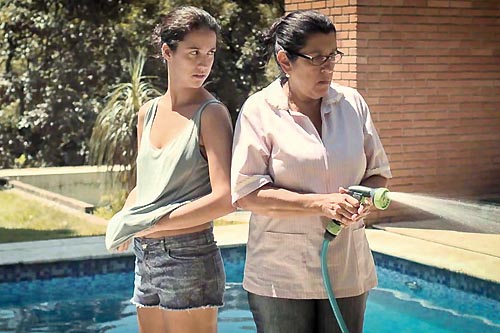
Sun has risen and she’s already up before anyone else in that upper class family mansion in the suburbs of São Paulo. She devotedly prepares breakfast, organizes around the house, and makes sure everyone will be on time and ready for their daily tasks. Everything is done with intensive care and commitment as any other mother; but she’s actually the maid who became the second mother. She had not forgotten where she came from, neither those she left alone back in her native Recife, keeping track of everyone through phone calls. Instead of surrendering to loneliness and isolation, she learned to adapt to the family she serves and also grew fond of them, loving each one differently. Somehow a replacement, the overwhelming mother, the serene father and the teenage flirting with adulthood, became the center of Val’s life, her dedication and sacrifice. And then, unexpectedly, her real daughter announces she’s coming to stay and to try an opportunity at a prestigious university, creating an anxiety for her arrival.

The strange visitor exposes her perspectives on future, as well as her aspirations in architecture, but her main role is to put these people in confront with themselves, offering them self-analysis, when she insistently points their faults as human creatures. Her presence becomes sort of a nightmare, but also the important element to unfold the truth, as she becomes everyone’s subject of discussion. As things and feelings heat up around them, Val must take a decisive step to preserve the essentiality of family values. It won’t be a surprise if Regina Casé makes it to the Oscars with this incredibly heartbreaking and exhilarating performance as the humbly loving protagonist. It has been years since Brazilian cinema experienced glory oversea, and it seems like the time has come. Specialists and audiences have been praising Anna Muylaert’s ravishing drama since its debut early this year at Sundance, citing the film as one the year’s best. And that’s right! Muylaert examination on family dependence and social divergences is a masterpiece that finds in truth its most important characteristic: the characters talk fearlessly from their heart, with such veracity and honesty that makes the audience immediately attached to their dilemmas, which include the way they treat and love each other. The director also builds a compassionated strategy, calling families to merge, as she observes how ambition can divide and set members apart, financially and emotionally (the original title, “Que Horas Ela Volta?” refers to children questioning the mother’s absence). Fulfilled with raw, throat-cutting dialogs, including a devastating scene where someone is asked in marriage, Muylaert created a film of great importance and extreme natural sensibility. (Opens Friday at Angelika Film Center and Paris Theater in Manhattan)
















Comments