

“IDA” ****
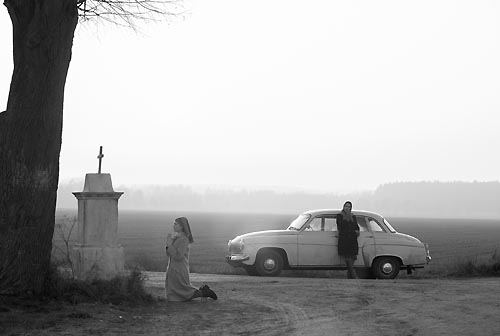
Faith is the strongest feeling of all, because it’s love and belief in something unseen, something you can’t completely understand. Commitment is also the highest level in responsibility, and devotion the result of those. Through an exhilarating atmosphere shot in black & white, this drama set in 1962 marvelously conceived by polish director Pawel Pawlikowski, opens with a sequence inside a convent, where a young nun and her sisters perform their daily routines and spiritual exercises. Anna, is a young orphan who’s about to make her definitive vows to church, when she learns that she must visit her aunt, the only family member left, before committing. “Do I really have to go, sister?” she asks, surprised and confused with the news. As she arrives in a city apartment filled with smoke, the camera introduces a different atmosphere, revealing aspects on the first meeting with her aunt Wanda, a bohemian and bitter judge whose promiscuous lifestyle is as pleasurable as it is infamous. Anna learns she’s the daughter of Jews killed during the war, and was mysteriously left at the church’s doorsteps.
They decide travelling to the countryside of Poland in order to investigate her orphan status and find out where her parents were buried. During the process, they struggle in many levels: to find the truth, to understand each other’s worlds, to rest the past away and to find a reason to move on with their beliefs. While Wanda had shut herself from any form of deep emotional contact, showing a careless personality and increasingly engaged on her somber habits, Anna sees the real world for the first time, and gets confronted with doubts and insecurities, as new emotions are being developed through her trip. It resembles the parallel between dark and light, the encounter of two different paths trying to see through each other’s eyes. Both Agata Trzebuchwoska as Anna and Agata Kulesza as Wanda give powerful performances, with layers of profound sorrow, uneasiness and the uncertainty of what the future holds for them. Through the story of the encounter and investigation of these two women, the director creates a mesmerizing film that contemplates characteristics of the human journey and the search for the Way of Life. The film explores many subjects at once with a positive result, demonstrating a touching sensibility within: abandonment, perseverance, integrity, human justice and brutality, lust, love, abuse and family standards. But the most important thing here is to point how great the film goes through all this issues, and manages to keep up with its essence: the depiction of faith, how the obstacles and challenges can change or shape one’s perspectives, and the necessity of a relationship with the Creator. One of this year’s most astonishing films!
















Comments