

By Roger Costa
HOLY COW
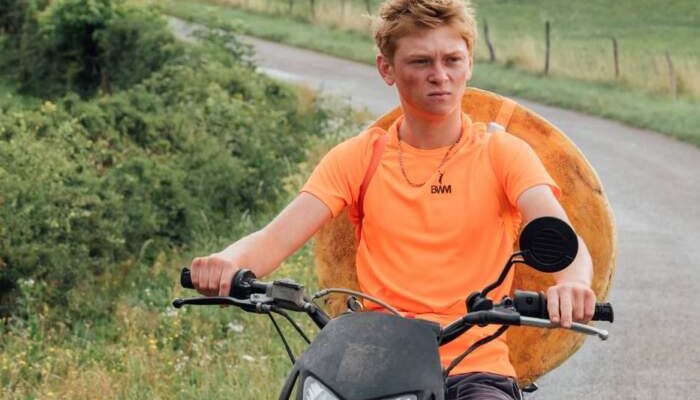
Every now and then, Cinema presents us with a memorable young character who grabs our heart and affection becoming an unforgettable experience of connection through its lenses. That’s the case of Totone, the antihero and troublesome teen in Louise Courvoisier’s outstanding feature-length directorial debut. Since the opening scene, we learn Totone is a rebellious, reckless and hopeless kid living in a farm community where cows, car-racings and cheese-making are the way of a living. Like many kids of his age, all he wants is to party and drink hard with his pals, as well as trying to get laid. He refuses his father’s request for help, either at the cheese production or simply watching over his little sister. His father also has a drinking problem, which leads the siblings on their own to learn and progress as they can. One night that changes drastically, when a car accident kills his father, leaving him to survive and provide for his sister. He needs to learn at first, and then to re-invent himself; he also needs orientation (and that comes from his little sister) on how to grow, to let it go the past and embrace the maturity and sacrifices ahead of him. These kids didn’t get a chance to grieve; their pain is silent, crying out from the inside, exposed in their saddened, hopeless facial expressions. They are on their own, no family and no help whatsoever, they must bond together and find strength within, while hoping for a better future. That chance comes when Totone decides to learn the process of cheese-making, aiming to enter an important local contest and earn money for their expenses. But it is at a local farm, owned by a rival’s father, where he finds the source for his experimental production, seducing the farmer’s daughter while his pals steal milk from their cows. At first Totone is looking out for his selfless interests (both to collect the product and to satisfy his hormones) but gradually he develops an intense and tender relationship with Marie-Lise, leading to a sincere romance. Precisely narrated, very touching and extracting incredibly convincing performances from the first time actors (Clément Faveau won the 2025 Lumiere Award for Best Promising Actor as Totone, while Maïwene Barthelemy was named Best Female Revelation with the 2025 Cesar Awards), Courvoisier gives a subtly empathic and timely a new shape to neo-realism with firm hands, proving to be on path to become a major French and world cinema filmmaker. The director also won major awards with her debut, including Cannes’ Un Certain Regard, and both the Cesar and the Lumiere Awards for Best First Film. Her most important attribute is examining these grieving, hopeless characters without judgement or attempting to make it a melodrama. She allows her characters to be humans, capturing extraordinary moments through Totone’s connections with his sister, his girlfriend, and his loyal pals, allowing them to show their real faces and flaws, no matter what, conquering the audience’s heart and creating that thrilling, delectable sense of “rooting for their triumph”. As Totone challenges himself to give the next step into maturity, he becomes a notorious and remarkable character, a representation of struggle and survival, social transformation and re-invent.
(Zeitgeist Films/Kino Lorber. Opens Friday, March 28 at Film Forum NYC)
GRAND TOUR
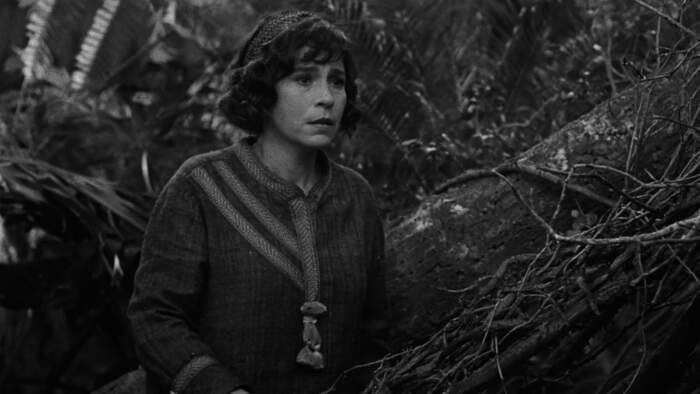
Winner of the Best Director Award at last year’s Cannes, Miguel Gomes returns with another fascinating take on unrequited love, literature, history, colonialism and the connections that make us who we are. Following a Portuguese man as he travels across East Asia, mysteriously running away from his fiance, the beloved auteur creates a poetic, immersive adventure about the power of love and the turbulence surrounding the human condition. Gorgeously shot in B&W and often switching to color, graced by lovely performances and eccentric characters, Miguel Gomes returns to form only to confirm himself as master of storytelling and cinematic pleasure. Featuring a memorable performance and unusual affecting laughter by Crista Alfaiate (can we start her Best Supporting Actress campaign please?), this is one of the most original works of the decade.
(MUBI. Opens Friday, March 28 at Film at Lincoln Center)
VIET AND NAM
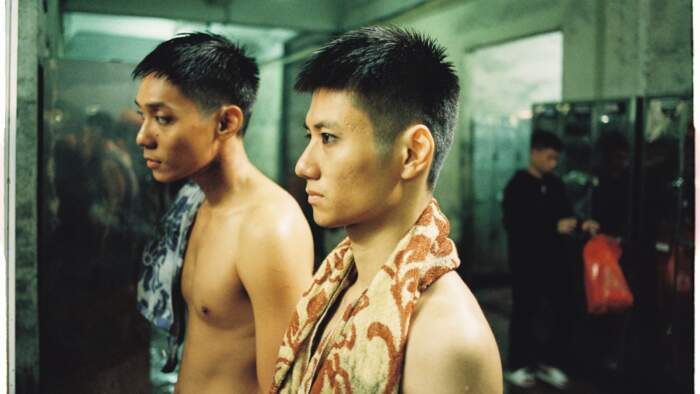
A poetic, surrealist and very erotic Queer-romance, writer-director Minh Quy Truong’s Cannes’ Queer Palm Award nominee follows the adventures, mystical and spiritual journeys of two young miners in love. As they proclaim their love for one another, honestly opening up about their emotions, desires and expectations, they travel through a dense, mysterious forest in order to locate a missing soldier’s corpse and wandering spirits. Blending magical realism, political statement and the challenges of being queer amidst war and patriarchy, director Truong conceives a bold, sexually-charged, and contemplative meditation on young love, the risks one must take for love and the haunting consequences of war. His images look like an operatic painting in movement, mysterious dark images and tropical-heat fueled angles that is as intriguing as it is beautiful and transfixing. Gorgeous, exquisitely hot and alluring!
(Strand Releasing. Opens Friday March 28 at IFC Center NYC with Director in person at select screenings)
JULIE KEEPS QUIET
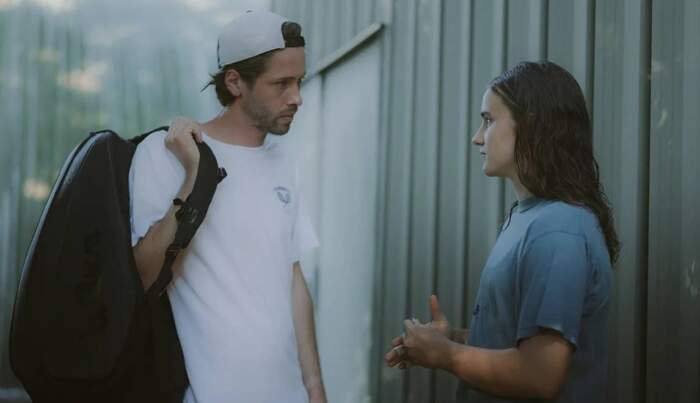
Produced by the Dardenne Brothers, this is a masterclass in suspense and neo-realism. It feels like director Leonardo Van Dijl really mastered the naturalistic genre (so well explored by the Dardennes) giving it a sophisticated new twist. An intense and utterly tense psychological thriller depicting the pressures and expectations over teen-athletes, the film centers on the turbulent emotions of Julie, an aspiring elite tennis player who is shaken by the tragic suicide of one of her teammates. As the investigation goes on, exposing abuse, manipulation and privilege, Van Dijl composes a devastatingly alarming and emotionally-charged portrait of how competition can lead to traumatic consequences, and how academic leaders can influence and shape the young generation according to their terms and interests. Actress Tessa Van den Broeck gives a breakthrough performance as the leading heroine, a talented girl uncertain of what’s next and carrying traumas of her own. An impressive, richly textured and absorbing slowburn influenced by the best in neo-realism.
(Film Movement. Opens Friday, March 28 at Metrograph NYC with Director in person at select screenings)















Comments